Glass partitions have become a staple in modern workplace design, offering a blend of openness and privacy that traditional walls often struggle to achieve. As an expert in office interiors and acoustic design, I’ve helped countless organisations navigate the choice between glass partition walls cost, installation considerations, and the tangible benefits for daily work life. Below, I’ll walk you through the key differences, pros and cons, and practical tips to help you decide whether glass wall enclosures or traditional stud walls are the right fit for your space.
Why organisations consider glass partitions
The appeal of glass partition walls office spaces is rooted in several practical and perceptual benefits. First, they maximise natural light. When you remove opaque barriers, daylight penetrates deeper into the workspace, which can boost mood, reduce lighting costs, and create a more inviting environment. Second, glass partitions offer a sense of openness without compromising on meeting room privacy and sound control when paired with appropriate glazing. Third, modular glass office walls bring flexibility; if your company expands, reconfiguring layouts becomes more straightforward than with fixed solid walls.
Of course, this flexibility comes with decisions about cost, installation, and maintenance. The phrase glass office walls cost is common among buyers who want to understand return on investment and lifecycle expenses. In practice, the total cost includes materials, glass treatment (tint, fret, etching), acoustic performance, hardware, and installation labour.
Glass partitions for offices transform spaces by maximizing natural light, ensuring privacy, and improving acoustics without sacrificing style. Modern designs support flexible work zones, collaboration, and impressive aesthetics. For business leaders seeking turnkey solutions, explore versatile options, installation efficiency, and durable materials. glass partitions for offices provide a professional, cost-effective pathway to a brighter, more productive workspace.
Comparing cost, installation, and long-term value
-
Cost considerations: When you ask, how much do glass office walls cost, you’re looking at a range influenced by glass type (clear, frosted, tinted, laminated), frame systems (frame-less, aluminium with slim mullions, or full-height framing), and any embedded features (sashes, doors, or frameless door hardware). Office glass partition walls cost can be higher upfront than traditional walls, but you may save on daylight-driven energy use and enjoy reduced space fatigue for staff. It’s worth budgeting for acoustic rated glass if you require quieter zones.
-
Glass partition installation: The process usually involves site measurements, selection of glass thickness (often 10–12 mm for interior partitions, with laminated options for safety), frame or frameless systems, and integration of doors. A phased installation approach—partitioning first, then adding doors, glazing, and finishes—minimises disruption. For some projects, modular glass office walls enable faster on-site assembly and easier future reconfiguration, which translates into lower disruption and potentially lower long-term operating costs.
-
Maintenance and lifecycle: Glass wall interior surfaces are easy to clean and maintain, which is a significant advantage in hygiene-sensitive spaces. However, hardware such as door closers, pivot hinges, and seals require periodic service to maintain performance. When considering glass wall enclosures or glass partition wall office setups, it’s prudent to factor in annual maintenance contracts as part of the total cost of ownership.
-
Aesthetics and perception: Clear glass can make spaces feel larger and more collaborative, while frosted or sand-blasted finishes offer privacy without sacrificing openness. If you’re aiming for a high-end look, bespoke glass wall interior designs with bevels or etched branding can elevate your brand presence. The right balance of glazing, frames, and door hardware defines the overall impression.
Cost considerations: When you ask, how much do glass office walls cost, you’re looking at a range influenced by glass type (clear, frosted, tinted, laminated), frame systems (frame-less, aluminium with slim mullions, or full-height framing), and any embedded features (sashes, doors, or frameless door hardware). Office glass partition walls cost can be higher upfront than traditional walls, but you may save on daylight-driven energy use and enjoy reduced space fatigue for staff. It’s worth budgeting for acoustic rated glass if you require quieter zones.
Glass partition installation: The process usually involves site measurements, selection of glass thickness (often 10–12 mm for interior partitions, with laminated options for safety), frame or frameless systems, and integration of doors. A phased installation approach—partitioning first, then adding doors, glazing, and finishes—minimises disruption. For some projects, modular glass office walls enable faster on-site assembly and easier future reconfiguration, which translates into lower disruption and potentially lower long-term operating costs.
Maintenance and lifecycle: Glass wall interior surfaces are easy to clean and maintain, which is a significant advantage in hygiene-sensitive spaces. However, hardware such as door closers, pivot hinges, and seals require periodic service to maintain performance. When considering glass wall enclosures or glass partition wall office setups, it’s prudent to factor in annual maintenance contracts as part of the total cost of ownership.
Aesthetics and perception: Clear glass can make spaces feel larger and more collaborative, while frosted or sand-blasted finishes offer privacy without sacrificing openness. If you’re aiming for a high-end look, bespoke glass wall interior designs with bevels or etched branding can elevate your brand presence. The right balance of glazing, frames, and door hardware defines the overall impression.
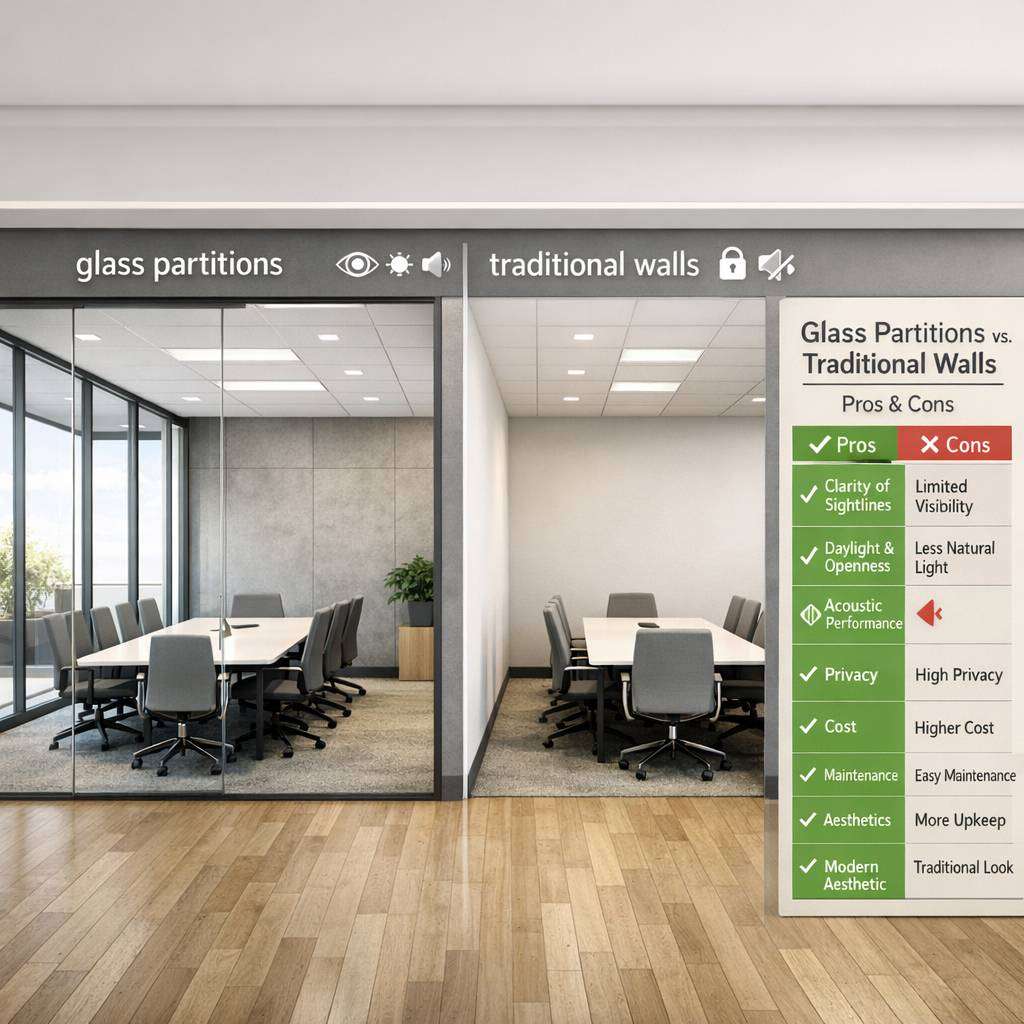
Pros and cons at a glance
-
Pros for glass partitions
- Natural light distribution: Increases perceived space, improves wellbeing, and can reduce artificial lighting needs.
- Flexible configuration: Modular glass office walls are easier to reconfigure than traditional walls, supporting growth and change.
- Visual connectivity with reduced acoustic intrusion: With layered glazing and acoustic seals, you can have open sightlines while maintaining privacy where needed.
- Quick deployment: In many cases, glass partition installation can be faster than constructing masonry walls, especially with modular systems.
-
Cons for glass partitions
- Acoustic limitations: Without proper acoustic design, glass partitions can transmit sound more than desired. The right glass thickness, laminated options, and floor-ceiling seals mitigate this, but it requires careful specification.
- Privacy trade-offs: Clear glazing may feel less private; you’ll often need frosted finishes or smart glass to strike the right balance.
- Maintenance of hardware: Hinges, door closers, seals, and tracks require regular checks and occasional replacement, which should be included in maintenance budgeting.
- Initial cost: The upfront investment for glass office walls cost can be higher than traditional walls, though lifecycle savings may offset this over time.
-
Pros for traditional walls
- Strong sound insulation: Solid walls typically offer superior acoustic separation without extra engineering.
- Visual privacy: Opaque walls prevent line-of-sight into private areas, which some organisations prioritise for compliance.
- Predictable budgeting: Standard wall systems often have a lower initial price and well-understood maintenance needs.
-
Cons for traditional walls
- Reduced daylight: Solid walls can create darker interiors and reduce the perceived space.
- Inflexibility: Reconfiguring a traditional office layout is generally more disruptive and costly.
- Perceived confinement: A ubiquitous use of solid walls can create a more closed and less collaborative atmosphere.
Pros for glass partitions
- Natural light distribution: Increases perceived space, improves wellbeing, and can reduce artificial lighting needs.
- Flexible configuration: Modular glass office walls are easier to reconfigure than traditional walls, supporting growth and change.
- Visual connectivity with reduced acoustic intrusion: With layered glazing and acoustic seals, you can have open sightlines while maintaining privacy where needed.
- Quick deployment: In many cases, glass partition installation can be faster than constructing masonry walls, especially with modular systems.
Cons for glass partitions
- Acoustic limitations: Without proper acoustic design, glass partitions can transmit sound more than desired. The right glass thickness, laminated options, and floor-ceiling seals mitigate this, but it requires careful specification.
- Privacy trade-offs: Clear glazing may feel less private; you’ll often need frosted finishes or smart glass to strike the right balance.
- Maintenance of hardware: Hinges, door closers, seals, and tracks require regular checks and occasional replacement, which should be included in maintenance budgeting.
- Initial cost: The upfront investment for glass office walls cost can be higher than traditional walls, though lifecycle savings may offset this over time.
Pros for traditional walls
- Strong sound insulation: Solid walls typically offer superior acoustic separation without extra engineering.
- Visual privacy: Opaque walls prevent line-of-sight into private areas, which some organisations prioritise for compliance.
- Predictable budgeting: Standard wall systems often have a lower initial price and well-understood maintenance needs.
Cons for traditional walls
- Reduced daylight: Solid walls can create darker interiors and reduce the perceived space.
- Inflexibility: Reconfiguring a traditional office layout is generally more disruptive and costly.
- Perceived confinement: A ubiquitous use of solid walls can create a more closed and less collaborative atmosphere.
Practical tips for choosing between glass partitions and traditional walls
-
Start with a light design brief: Define your priorities — daylight, privacy, acoustics, and future flexibility. If collaboration and mental well-being are top priorities, glass partitions often win on balance.
-
Specify acoustics early: If you choose glass partitions, plan for an acoustic performance target (for example, an STC rating or dB attenuation) and ensure doors, seals, and frame systems are matched to that target.
-
Consider hybrid solutions: You don’t have to choose one over the other. A hybrid approach, using glass partitions in open-plan zones and traditional walls for privacy-critical spaces, can offer the best of both worlds.
-
Budget with lifecycle in mind: Ask for a total cost of ownership, including glass partition installation, hardware, maintenance, and potential reconfiguration costs. This helps answer questions like how much do glass office walls cost over the long term.
-
Engage a specialist early: Partner with a design-led contractor who can advise on glass wall interior aesthetics, safety standards, and integration with HVAC and electrical systems.
Start with a light design brief: Define your priorities — daylight, privacy, acoustics, and future flexibility. If collaboration and mental well-being are top priorities, glass partitions often win on balance.
Specify acoustics early: If you choose glass partitions, plan for an acoustic performance target (for example, an STC rating or dB attenuation) and ensure doors, seals, and frame systems are matched to that target.
Consider hybrid solutions: You don’t have to choose one over the other. A hybrid approach, using glass partitions in open-plan zones and traditional walls for privacy-critical spaces, can offer the best of both worlds.
Budget with lifecycle in mind: Ask for a total cost of ownership, including glass partition installation, hardware, maintenance, and potential reconfiguration costs. This helps answer questions like how much do glass office walls cost over the long term.
Engage a specialist early: Partner with a design-led contractor who can advise on glass wall interior aesthetics, safety standards, and integration with HVAC and electrical systems.
In summary, glass partition walls for offices present a compelling mix of openness and function when matched with the right acoustic and privacy strategy. If you weigh the upfront glass office walls cost against long-term benefits such as natural light, flexibility, and ease of maintenance, many organisations find that glass wall enclosures offer superior value for dynamic, future-facing workplaces.